

One of the first questions serious buyers ask about Delano Residences & Hotel Miami is: how does the payment plan work? It’s the right question. Understanding the deposit structure before you sign anything shapes your cash flow planning, entity structure decisions, and whether this project fits your timeline.
Here’s the complete breakdown.
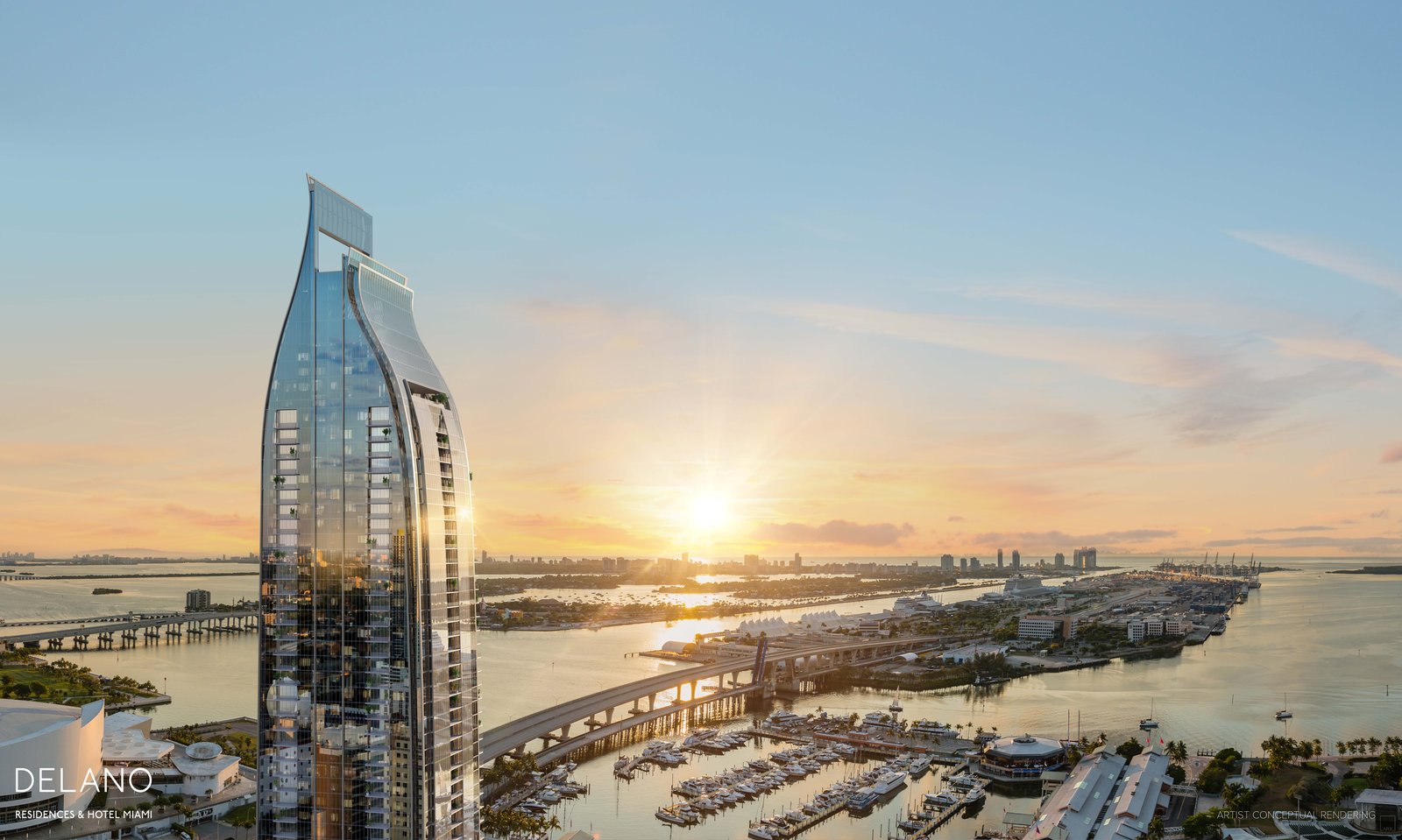
The Delano Payment Schedule
Delano Residences & Hotel Miami uses a milestone-based deposit structure — standard for high-quality pre-construction projects in Miami, and more buyer-friendly than what was typical during the 2022 peak.
| Milestone | Amount Due |
|---|---|
| At contract | 10% |
| October 2026 | 10% |
| Groundbreaking (est. June 2027) | 10% |
| 1 year after groundbreaking (est. June 2028) | 10% |
| At closing (est. end of 2030) | 60% |
Total pre-closing deposits: 40%. Balance due at closing: 60%.
What Each Milestone Means
10% at contract — This is your commitment. Once you sign the purchase agreement and wire the first deposit, you’re in contract. The developer begins processing your purchase and the unit is taken off the market.
10% in October 2026 — A fixed-date milestone rather than a construction event, which means it’s predictable regardless of where the project stands physically. Plan for this wire approximately 6–12 months after your initial contract signing, depending on when you execute.
10% at groundbreaking (est. June 2027) — Triggered when construction officially begins. PMG has publicly targeted June 2027 for groundbreaking. This milestone is construction-dependent, meaning it could shift if the groundbreaking date moves — though PMG’s track record and financing position suggest they’re on schedule.
10% one year after groundbreaking (est. June 2028) — One year into active construction. By this point you will have deployed 40% of the purchase price and the tower will be visibly rising.
60% at closing (est. end of 2030) — The largest payment, due when the building receives its Certificate of Occupancy and closings begin. Most buyers at this stage will either bring cash or arrange financing. Note that mortgage financing for branded luxury condos in Miami is available but options narrow for non-US residents — plan ahead.
D Collection vs. D Residences — Same Payment Schedule?
Yes. Both the D Collection (investor units on floors 20–47) and the D Residences (private residences on floors 49–75) use the same 10/10/10/10/60 structure. The difference is in pricing tiers, unit types, and what you can do with the unit after closing — not in how you pay during construction.
Planning for the 60% Balance
The 60% closing payment is where planning matters most. Four strategies we see buyers use:
All-cash close — The cleanest option, especially for international buyers. No lender approval process, no risk of rate changes affecting affordability, and developers sometimes extend small courtesies to all-cash buyers.
Pre-arranged financing — Some buyers begin working with lenders 12–18 months before closing to lock in terms and get ahead of documentation requirements. Lenders who specialize in luxury Miami condos understand the branded-residence category.
Unit sale before closing — D Collection buyers who purchased early may be positioned to assign or sell their contract before closing, capturing pre-construction appreciation without ever reaching the 60% payment. This requires the developer’s approval per the purchase agreement terms.
Structured entity purchase — International buyers should consider whether to purchase through an LLC, trust, or foreign entity, which can affect financing eligibility and FIRPTA exposure at closing. This decision should happen before you sign, not after.
What the 10/10/10/10/60 Structure Tells You About the Project
Developer deposit requirements are a signal. Projects asking for 50–60% pre-closing are either under-financed or taking advantage of peak demand. Projects asking for less than 30% may lack lender commitments or construction certainty.
The 40% pre-closing structure at Delano reflects a project that’s well-capitalized with construction financing already in place — which is consistent with PMG’s history of delivering fully. It also means buyers are protected: if the developer fails to deliver (extremely unlikely given PMG’s 30+ year track record), Florida’s condominium law requires all deposits to be held in escrow and returned to buyers.
Timing Your Decision
If you’re evaluating Delano now, the window matters. Units released in early phases typically carry lower prices than units released as construction progresses. Every milestone payment that passes is also a price floor for resale — buyers who are already 20% or 30% in have a cost basis that limits how aggressively the market can move against them.
We’re available to walk through the current pricing matrix, available unit types, and how the payment schedule aligns with your specific financial situation — with no obligation and no developer bias.
Carlos Olivares is a Broker-Associate at Berkshire Hathaway HomeServices EWM Realty, Chairman’s Circle Gold. He represents buyers — not developers — in pre-construction transactions throughout South Florida.
FL License #3051724 | Schedule a consultation